
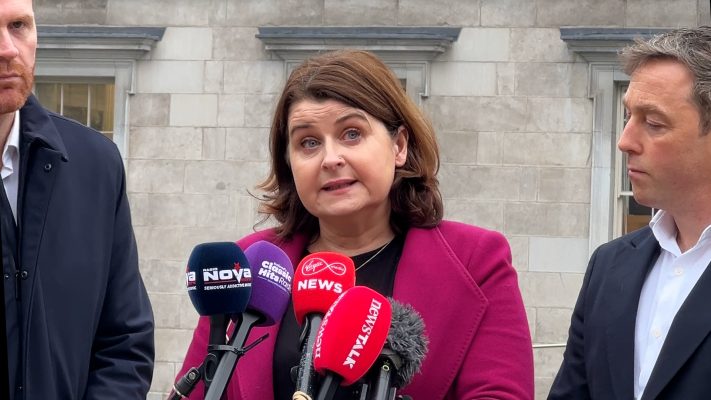
The government should be using this week to put a plan in place, for a suite of measures, that can be deployed next week when the Dáil is sitting
The government’s hands-off approach to the energy crisis is reckless and dangerous, according to Social Democrats energy spokesperson Jennifer Whitmore.
Deputy Whitmore said:
“An unprecedented 400 million barrels of oil was released from the reserves of dozens of countries yesterday – and it didn’t make a dent in oil prices. They are continuing to soar.
“We are all reading grim forecasts of oil prices reaching $150, or even $200, a barrel if the conflict in the Middle East doesn’t end. A sobering reality is that, even if the conflict does end today, it will take weeks – if not months – for energy supply in oil and gas to return to normal.
“As the world looks on in horror at the spiralling war in the Middle East, and consumers are faced with soaring energy prices, our government is sitting back and twiddling its thumbs. Yesterday, Health Minister Jennifer Carroll MacNeill said the government wanted to wait and see what the situation was at the end of March. This hands-off approach is both reckless and dangerous.
“Hundreds and thousands of people were already struggling to pay sky-high energy prices before the United States and Israel started this illegal war. Nearly 320,000 people are in arrears on their electricity bills. These relentless price rises will drive many of those people over the edge.
“The bizarre thing about the government’s indifferent approach to this crisis, is they have a template of supports that can be deployed. A reduction in excise duty – reducing petrol by 20c a litre and diesel by 15c a litre – was introduced in 2022 after the Russian invasion of Ukraine, when energy prices previously soared.
“The government should be using this week to put a plan in place, for a suite of measures, that can be deployed next week when the Dáil is sitting. Their failure to act is a dereliction of duty.
“That suite of measures should include a targeted €400 energy credit, which can immediately be provided to 800,000 families who are struggling most. There should also be a cut to excise duty, which accounts for the biggest tax on petrol and diesel.”
“It is time for the government to stop narrating the problem and start planning – so that action can be taken on Wednesday, when the Dáil is sitting.”