
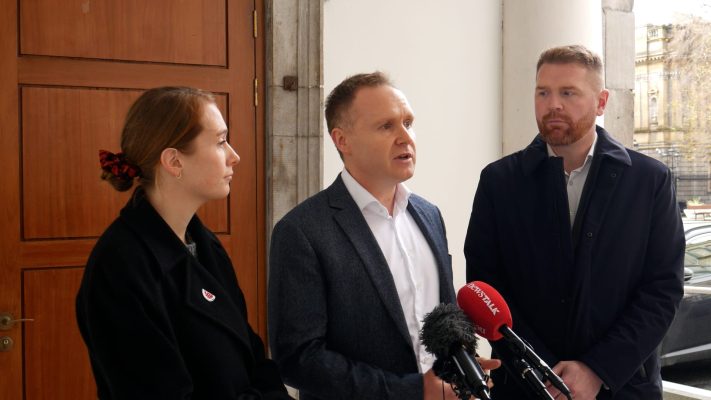
The HSE’s new autism protocol must not be a substitute for proper investment in a broken system, according to Social Democrats spokesperson for mental health and disability Liam Quaide.
Deputy Quaide said:
“The new HSE Autism Assessment and Intervention Pathways Protocol contains some positive elements.
“A clearer assessment pathway for autism has been long needed. Not every child or adult will require the same intensity of assessment. It is also welcome that the protocol places greater emphasis on formulation, support needs and earlier intervention.
“But the central question is whether these safeguards will survive contact with a system that is already overwhelmed. Families have had years of pathways, protocols, reviews and launches. Meanwhile, young people and adults are still waiting far too long for assessments, therapies and social supports.
“There is a real risk with this protocol that ‘proportionate assessment’ becomes a euphemism for ‘rushed assessment’. Autism is a consequential diagnosis that requires careful consideration of developmental history, communication needs, sensory needs, intellectual strengths and challenges, mental health, trauma, and other differential or co-occurring conditions.
“The final protocol does recognise that more complex or unclear presentations may require more intensive Tier 2 or Tier 3 assessment. But it also allows for lower intensity Tier 1 assessments, which may, in some circumstances, be carried out by an individual practitioner rather than through a multidisciplinary approach.
“That is a significant shift. It may be appropriate in some clear cases, but it carries real risk of misdiagnosis if introduced into a system under severe waiting list and staffing pressure.
“We need absolute clarity that people with complex developmental, communication, sensory or mental health difficulties will not be funnelled into lower-intensity assessments simply because services are under pressure.
“Autism diagnosis should involve in-person assessment and careful consideration of the whole context of a person’s life experience. One key concern arising from the pilot of the protocol was a low rate of identification of co-occurring conditions. That should set alarm bells ringing. If co-occurring conditions are missed, people may receive an incomplete assessment, an inaccurate formulation, or supports that do not meet their needs.
“Parents’ groups are right to be wary. Families have lived through years of delayed Assessments of Need, inadequate follow-through, legal battles, staff shortages and services that often cannot provide what assessments identify.
“A faster route to diagnosis means very little if it is not accompanied by timely access to speech and language therapy, occupational therapy, psychology, mental health support, and school and family supports.
“The HSE should publish clear implementation safeguards. There should be independent auditing of assessment quality, transparent monitoring of regional variation, and clear data on how often lower-intensity assessments are escalated.
“The Government should not present this protocol as a substitute for investment. The real test is whether there are enough clinicians to provide careful assessment and meaningful intervention.
“Children, adults and families do not need another pathway that leads to another waiting list. They need timely, careful assessment – and the supports that should follow.”
May 27, 2026