
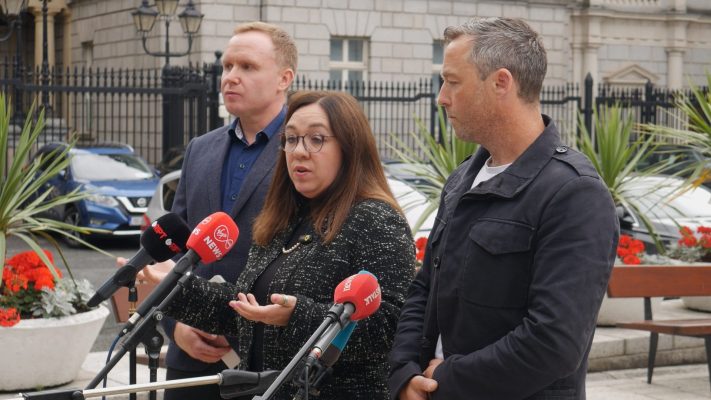
The announcement of so-called “inclusive special classes” in mainstream schools has been made without clarity or engagement with school communities, according to Social Democrats education spokesperson Jen Cummins.
The announcement forms part of a wider package of 45 new special classes for the 2026/27 school year, including five pilot “inclusive” classes intended to allow students to move between mainstream and specialist settings during the school day.
Deputy Cummins said:
“I fully support the expansion of special education provision and the principle of inclusion. However, this is a policy which has been announced without clarity, proper consultation, and answers to very basic questions that schools, parents and professionals need addressed.
“The model raises immediate concerns about how it will operate in practice and whether it reflects the diverse needs of children across the system.
“There is a growing pattern in how special classes are being developed, with a heavy concentration on autism-specific provision. We know from recent data that the vast majority of new classes continue to be designated for autism, despite a wide range of other needs existing across the system.
“The announcement risks causing further confusion rather than delivering genuine inclusion – key questions remain unanswered.
Was any consideration given to designing these as broader SEN classes rather than restricting enrolment to autism? Were schools actually consulted on this model, and did they request it? Is this a pilot, and, if so, what are the timelines and how will success be measured? Has the additional data the government claimed to have collected through the parents portal been used to inform these decisions?
“There is contradiction at the heart of current policy: we are being told on the one hand that a formal diagnosis will not be required for children to access supports at primary level, yet at the same time we are seeing the continued rollout of classes that appear to depend on autism-specific criteria.
“That inconsistency needs to be addressed clearly and transparently. AsIAm autism charity have also mentioned having not been consulted on these decisions despite that fact that this seems to directly impact the autistic community.
“There has been little to no meaningful engagement with external stakeholders in the development of this model. Schools, parents, advocacy organisations and frontline professionals must be part of the conversation.
“You cannot build an inclusive education system without actually including the people who deliver and rely on it.
“The Minister of Education must urgently provide clarity and commit to a more transparent and collaborative approach. If this model is to work, it must be clearly defined, properly resourced, and developed in partnership with those on the ground. Right now, that simply has not happened.”
April 21st, 2026