
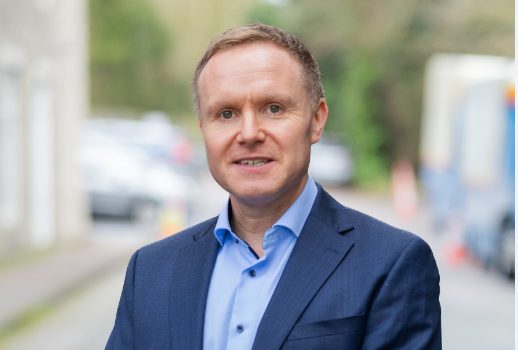
Government policy is failing many of Ireland’s small towns, according to Social Democrats spokesperson for Rural and Community Development Liam Quaide.
Deputy Quaide said:
“The latest CSO data on small towns paints a stark picture of the level of disadvantage faced by their communities.
“Many of these towns are growing. Families are laying down roots. Communities are sustaining schools, sports clubs, arts groups, voluntary organisations and local businesses. But too often they are being asked to absorb population growth without the jobs, services, transport and amenities to sustain it.
“The figures for independent urban towns are striking. These towns have higher rates of unemployment, higher poverty risk, greater reliance on social welfare, poorer health outcomes and higher levels of long-term health conditions than other parts of the country.
“That is a national planning failure.
“For years, public policy has centralised services, weakened local access to banking, post offices, healthcare and transport, pushed people into cars, and then wondered why town centres are under pressure.
“We have had plenty of strategies, launches and talking shops. Meanwhile, the actual shops have been closing.
“Town Centre First and Our Rural Future contain worthwhile ideas, but the scale and pace of delivery are nowhere near adequate. Too often, funding is fragmented into smaller schemes.
“Growing towns need integrated funding for amenities based systematically on population need. Playgrounds, parks, youth spaces, community facilities, libraries, sports facilities, public works and cultural infrastructure should be planned as basic provision – not left to the chance of whether a voluntary committee can navigate a maze of disconnected grants.
“Local volunteers are being forced to become social entrepreneurs, project managers, fundraisers, procurement specialists and compliance officers simply to secure amenities that should form part of coherent public planning.
“Community groups do extraordinary work, but they should not be left compensating for the absence of government planning. The current model rewards areas with the most dynamic voluntary capacity rather than those with the greatest objective need.
“That is not fair, and it is not a serious way to plan for growing towns.
“A town centre needs people living, working, shopping and accessing services there. It needs local shops, cafés, childcare, youth facilities, cultural spaces, transport, services and appealing public spaces.
“Government should not stand over a model where towns are expected to create more housing and support a greater population without the social infrastructure to match.
“We need a serious programme for small towns: tackling dereliction and vacancy, supporting small independent retailers, expanding Local Link, restoring local services, investing in community amenities, and making it viable for people to live over shops and in town centres again.
“People should not be forced into long car journeys for work, school, healthcare or basic services. Small towns need the investment they deserve.”
April 30th, 2026