
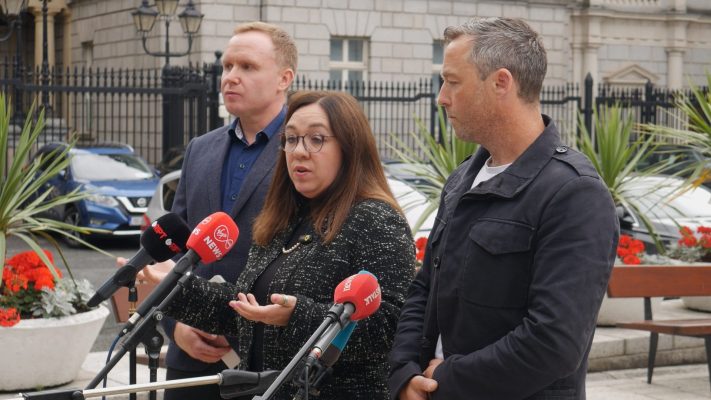
Social Democrats TD Jen Cummins has accused the government of failing to deliver the Hot School Meals Programme in a way that is fair, sustainable and genuinely centred on children’s nutritional needs.
Deputy Cummins, who is the party’s spokesperson on education, made her comments after the issue was raised today at the joint Oireachtas Committee on Education and Youth.
She said:
“The evidence presented to the committee shows that the programme is now at a critical point where its weaknesses must be addressed rather than ignored.
“The core truth behind hot school meals is simple – children cannot learn if they are hungry. That is why this programme matters so much.
“However, supporting the principle of school meals does not mean turning a blind eye to how it is being delivered. If we get this wrong, we undermine the very outcomes the programme is supposed to achieve.
“From what we heard this morning, the value of school meals for children living in poverty is clear. Not only does the scheme reduce stress at home, it ensures that children have the energy to properly engage in the classroom and learn.
“But the evidence also points to serious problems with food quality, portion sizes, waste and the additional burden the programme places on schools.
“We heard repeatedly that while schools and families support the idea of hot meals, they are deeply concerned about how the scheme is operating in practice. Parents are telling us that younger children are overwhelmed by portions they can’t finish, older children are still hungry, and far too much food is ending up in the bin. That is not acceptable when public money is being spent and children’s nutrition is at stake.
“For some children, school meals are now their most reliable hot meal of the day. This underlines the need for higher standards, not lower expectations.
“When a programme becomes this important in children’s lives, the bar must be set higher. Meals need to be nutritious, age-appropriate and delivered in a way that respects children’s dignity. A one-size-fits-all, outsourced model simply does not achieve that.
“We need to look to international models, where school meals are treated as a public good rather than a private contract.
“I have visited schools that use local providers and on-site kitchens, where meals are part of the school day and part of children’s social development. Such systems create local jobs, reduce waste, improve quality and give schools real control. This is the direction Ireland should be moving in.
“This programme should be about nourishment, not box-ticking. Good nutrition in childhood supports better health, better educational outcomes and lower costs for the State in the long run. If we prioritise speed over quality now, we will pay for it later.”
January 22, 2026