
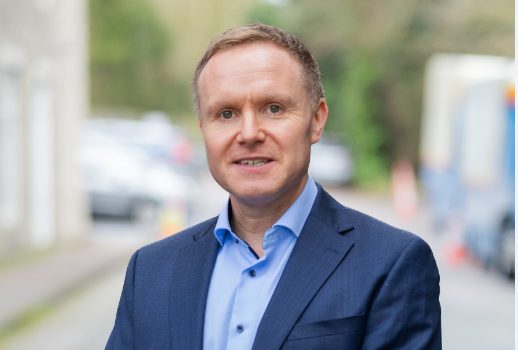
The extraordinary fragmentation of disability service delivery in the State is making it impossible to guarantee equity, plan services properly, or ensure public money is being used in the most effective way, according to Social Democrats disability spokesperson Liam Quaide.
Deputy Quaide, who was commenting after receiving a parliamentary reply showing that the HSE has approximately 1,172 service arrangements or grant aid agreements with over 494 organisations providing disability services on its behalf, said:
“This reply reveals the extraordinary fragmentation of disability service delivery in the State.
“On paper, we talk about integrated, standardised, person-centred services. In practice, what emerges here is a remarkably disjointed system delivered through over 494 organisations, including 226 private for-profit providers, under 1,172 separate arrangements.
“These comprise fifteen Section 38 organisations, two hundred and thirty seven Section 39 organisations, sixteen out-of-state organisations and two hundred and twenty six private for-profit companies.
“The reply also states that approximately 60% of disability resources are allocated to residential services for over 8,800 people, while a further 20% is targeted at day and rehabilitative training services for approximately 23,000 people in over 1,000 locations, with the remaining 20% funding respite, personal assistant and home support hours, Children’s Disability Network Teams and other supports.
“It points to a system that is haphazard, dispersed, incapable of guaranteeing equity of provision, and essentially ungovernable.
“When disability provision is delivered through hundreds of separate organisations, it becomes much more difficult, if not impossible, to ensure that people have access to a similar standard of support and rehabilitation regardless of where they live.
“It is also extraordinarily difficult to govern a system on this basis. When public services are being channelled through 494 organisations and 1,172 separate arrangements, it is inevitable that significant amounts of time, energy and money are being consumed by administration, duplication, contract management and attempts to hold together a disjointed system.
“The figure of 226 private for-profit organisations is also significant. It underlines the extent to which the State has come to rely on an increasingly commercialised model of provision. That raises serious questions about long-term planning, integration, consistency and accountability.
“The reply also suggests a system still heavily weighted towards more intensive and often higher-cost responses, rather than one built firmly around early intervention and strong community supports that can sustain a good quality-of-life and help avert crises.”
“Ultimately, what this reply shows is the gap between policy language and reality on the ground.
“Until there is a much stronger focus on direct public provision, workforce planning, and genuinely standardised models of rehabilitation grounded in a human rights framework, disabled people and their families will continue to experience the system as a frustrating maze, rather than as a coherent set of services they can rely on.”
April 21st, 2026